The short answer
For most RVers in 2026, the best power inverter is a pure sine wave inverter/charger, and the Victron MultiPlus is our top pick — it inverts, charges your batteries from shore or generator, and switches between them automatically, all with a 5-year warranty and the best system integration in the category. For most of that capability at a much lower price, the AIMS 2000W inverter/charger is the best value, and the Renogy 3000W Pure Sine is the best standalone inverter for the money. On a budget, the Giandel 2000W is a UL-listed pure sine unit for around $270. Always choose pure sine, not modified sine, and size the continuous watts above your largest simultaneous AC load.
Why we're confident: we rank inverters on real continuous wattage and surge headroom for RV loads, not peak-watt marketing, and we flag when you actually need an inverter/charger versus a plain inverter. Full comparison, sizing math, and tiered picks below.
Quick picks
- Best overall (inverter/charger): Victron MultiPlus 12/2000 — inverts, charges, and auto-transfers; 5-year warranty. Premium · ~$700–1,100
- Best standalone inverter: Victron Phoenix Smart 2000VA — clean pure sine with Bluetooth if you already have a charger. Premium · ~$500–700
- Best value: Renogy 3000W Pure Sine — clean output and strong watts-per-dollar. Mid · ~$350–500
- Best value inverter/charger: AIMS 2000W Inverter/Charger — 4,000W surge and a 30A transfer relay for far less than premium. Mid · ~$500–700
- Best budget: Giandel 2000W Pure Sine — UL-listed, wired remote, dual outlets. Budget · ~$270
- Best premium alternative: Xantrex Freedom XC 2000 — rugged RV-OEM inverter/charger. Premium · ~$700–900
At a glance
| Type | What it does | Waveform | Best for |
|---|---|---|---|
| Inverter/charger | DC→AC, plus charges batteries and auto-transfers shore power | Pure sine | Full-timers, boondockers |
| Standalone inverter | DC→AC only (needs a separate charger) | Pure sine | Rigs with a good converter already |
| Modified sine inverter | DC→AC with a rough waveform | Modified | Tools/lights only — avoid for electronics |
*Continuous watts, not peak/surge watts, are what you can run all day. Peak figures only cover the split-second startup surge of motors and compressors.
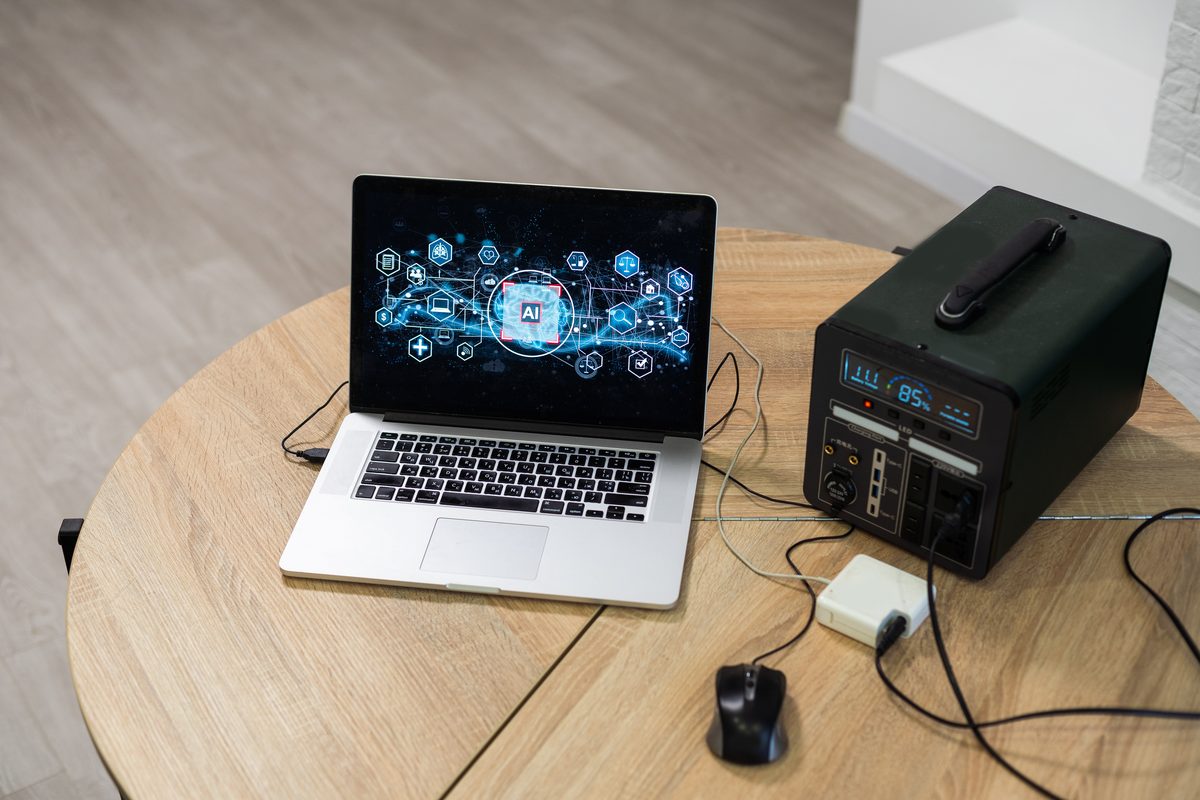
Compare the picks
| Product | Tier | ~Price | Best for |
|---|---|---|---|
| Victron MultiPlus 12/2000 | Premium | ~$700–1,100 | Best all-in-one system |
| Victron Phoenix Smart 2000VA | Premium | ~$500–700 | Best standalone inverter |
| Renogy 3000W Pure Sine | Mid | ~$350–500 | Best value / watts per dollar |
| AIMS 2000W Inverter/Charger | Mid | ~$500–700 | Value inverter/charger |
| Giandel 2000W Pure Sine | Budget | ~$270 | Cheapest clean power |
| Xantrex Freedom XC 2000 | Premium | ~$700–900 | Rugged RV-OEM pick |
The reviews
Victron MultiPlus 12/2000 (Inverter/Charger)
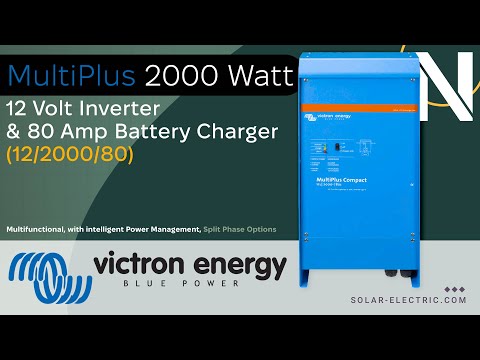
Premium · ~$700–1,100 · 5-year warranty
The system-builder's benchmark. The MultiPlus is a pure sine inverter, a smart multi-stage battery charger, and an automatic transfer switch in one box, so when you plug into shore power it charges your bank and passes power through, and when you unplug it inverts seamlessly. It talks to the rest of a Victron system (MPPT, shunt, Cerbo) through one app, and it is backed by the best warranty and support in the category. It costs more and usually wants professional-grade wiring, but it is the one you stop thinking about. Sizes run from 12/2000 up through 3000VA and 24V.
Pros
- Inverter + charger + transfer in one
- Best ecosystem integration & app
- 5-year warranty, top support
Cons
- Highest price
- Wants careful, heavy wiring
Victron Phoenix Smart 12/2000VA
Premium · ~$500–700 · pure sine, Bluetooth
If your rig already has a good converter/charger and you only need clean AC, the Phoenix Smart is the standalone inverter to buy. It delivers true pure sine output, integrates over Bluetooth with the VictronConnect app, and carries the same build quality and support as the MultiPlus without paying for the charger you do not need. Great for a targeted inverter circuit feeding outlets or a residential fridge.
Pros
- Clean pure sine, Victron reliability
- Bluetooth monitoring
- Cheaper than an inverter/charger
Cons
- No built-in charger or transfer
- Still a premium price
Renogy 3000W 12V Pure Sine Wave Inverter
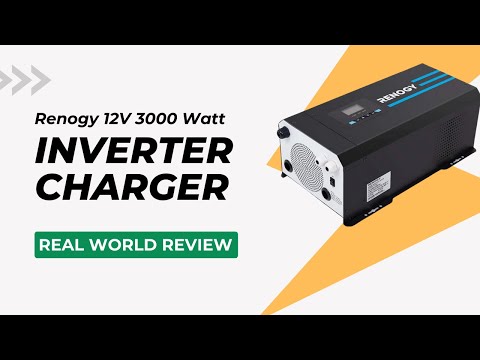
Mid · ~$350–500 · clean output, best $/W
The value sweet spot for a standalone inverter. The Renogy 3000W puts out genuinely clean pure sine across the spectrum, handles big loads with a strong surge rating, and costs a fraction of premium units — the 2000W version dips to around $286. Renogy's built-in transfer switches draw mixed reviews, so many owners pair it with a separate automatic transfer switch or run it on a dedicated inverter circuit; used that way it delivers years of trouble-free power for the money.
Pros
- Clean pure sine, big surge headroom
- Excellent watts per dollar
- 12V and 24V options
Cons
- Built-in transfer switch is hit-or-miss
- Support can be uneven
AIMS 2000W Inverter/Charger
Mid · ~$500–700 · 4,000W surge, 30A transfer
Most of the MultiPlus job for a lot less money. The AIMS 2000W inverter/charger delivers 2,000W continuous with a 4,000W surge, a built-in multi-stage charger, and a 30A transfer relay that switches to shore power automatically. It is a favorite for boondockers who want a true all-in-one without the premium price and who do not need the deep Victron ecosystem. Solid, well-supported, and widely used in RV and off-grid builds.
Pros
- Inverter + charger + transfer
- Strong 4,000W surge
- Far cheaper than premium
Cons
- No premium app ecosystem
- Heavier, utilitarian build
Giandel 2000W Pure Sine Wave Inverter
Budget · ~$270 · UL458 listed, wired remote
The cheapest credible pure sine inverter for an RV. The Giandel 2000W is UL458 listed, comes with a wired LED remote, dual AC outlets and a USB port, and runs quiet on dual cooling fans. It is a standalone inverter, so you keep your existing charger, but for feeding outlets, a TV, or a residential fridge on a budget it punches well above its price. Giandel also makes a 3000W version in the low $300s.
Pros
- Lowest price for true pure sine
- UL458 listed, wired remote
- Quiet dual fans
Cons
- Standalone inverter only
- Lighter warranty/support
Xantrex Freedom XC 2000
Premium · ~$700–900 · inverter/charger, RV-OEM favorite
Xantrex is the name you already see wired into a lot of factory RV builds, and the Freedom XC is why: a rugged pure sine inverter/charger with a built-in transfer switch, a remote panel option, and a reputation for surviving RV vibration and heat. If you want an all-in-one from a brand your service center already knows, the Freedom XC is the premium alternative to Victron.
Pros
- Rugged, proven in RV OEM use
- Inverter + charger + transfer
- Widely serviced brand
Cons
- Premium price
- Less app/ecosystem than Victron
See it in action
Official demos and hands-on walkthroughs of our picks. Videos play right here via YouTube.
How to choose
1. Inverter or inverter/charger?
A plain inverter only turns battery DC into household AC. An inverter/charger also charges your batteries from shore power or a generator and automatically transfers between shore and battery power. Full-timers and boondockers usually want the inverter/charger; if your rig already has a good converter and you only need a few outlets to work off-grid, a standalone inverter is cheaper and simpler.
2. Always buy pure sine, not modified sine
Pure sine wave power matches the clean waveform from a home outlet. Modified sine is cheaper but can hum, run motors hot, and upset sensitive electronics, medical devices like CPAPs, and some chargers. For an RV, pure sine is the only sensible choice.
3. Size continuous watts to your real loads
Add up the AC devices you will run at the same time and choose an inverter whose continuous rating clears that number with headroom, not the peak/surge figure. A 2,000W unit covers a coffee maker, laptop, TV, and fridge; running a rooftop air conditioner usually needs 3,000W or more plus a soft start. See our A/C soft start guide if that is your goal.
4. Match it to your battery bank and wiring
A big inverter pulls enormous current from the battery — a 2,000W load is roughly 170 amps at 12V — so you need a lithium bank that can deliver it and short, heavy-gauge cables with a properly sized fuse. Size the bank first; our deep-cycle battery guide and power systems guide walk through the whole chain.
Frequently asked questions
What size inverter do I need for my RV?
Add up the wattage of the AC devices you will run at the same time and pick an inverter whose continuous rating exceeds that total with some headroom. A 2,000-watt inverter handles typical loads like a coffee maker, laptop, TV, and residential fridge, while running a rooftop air conditioner generally requires 3,000 watts or more, ideally paired with an A/C soft start.
Do I need a pure sine wave inverter?
For an RV, yes. Pure sine wave inverters produce clean power like a home outlet, which is important for electronics, chargers, and medical devices such as CPAP machines. Modified sine wave inverters are cheaper but can cause humming, overheating in motors, and problems with sensitive gear, so they are best limited to simple tools and lights.
What is the difference between an inverter and an inverter/charger?
A standalone inverter only converts battery DC power into household AC power. An inverter/charger does that and also recharges your batteries from shore power or a generator, and it automatically transfers between shore power and battery power. Most full-time and off-grid RVers prefer an inverter/charger for its all-in-one convenience.
Can an inverter run my RV air conditioner?
Only a large one, and usually with help. A typical 13,500 to 15,000 BTU rooftop air conditioner needs about 3,000 watts of continuous inverter capacity, and its startup surge is high enough that most setups also use an A/C soft start to reduce the initial draw. You also need a substantial lithium battery bank to sustain it.
How big a battery bank do I need to run an inverter?
Enough lithium capacity to both supply the current and last as long as you need. A 2,000-watt load draws roughly 170 amps at 12 volts, so you need batteries rated to deliver that current continuously and enough amp-hours for your run time. Sizing the battery bank and cables correctly is as important as the inverter itself.
Related guides
Best RV Power Systems
Battery, DC-DC, solar and inverter — the full off-grid system the inverter plugs into.
Read the guide →Best RV Deep-Cycle Batteries
Size the lithium bank that can actually feed a big inverter.
Read the guide →Best RV A/C Soft Starts
Cut the A/C startup surge so your inverter or generator can run it.
Read the guide →