The short answer
A complete off-grid RV power system is six parts working together, not one purchase: a lithium house battery (Battle Born 100Ah, or the Renogy 100Ah for value) to store energy, a Renogy 50A DC-DC charger to refill it from your alternator as you drive, a Victron SmartSolar 100/30 MPPT to harvest solar while parked, and a 2,000W pure-sine inverter to run household electronics. Size the battery to your daily amp-hour draw first, then match the charging sources to it.
Why we're confident: this guide treats power as a system and names one proven pick per role, so the parts actually work together instead of fighting each other.
The system at a glance
A full off-grid build is really six parts working together. Here's the role each plays and the pick we'd start with — choose one per row and you have a complete system.
- House battery (the heart): Battle Born 100Ah LiFePO4 — stores the energy everything else moves. Premium · ~$800–900
- Best value battery: Renogy 100Ah LiFePO4 — most usable capacity per dollar. Mid · ~$400–550
- Charge while you drive: Renogy 50A DC-DC Charger — refills the bank from your alternator on the road. Mid · ~$150–200
- Charge while you sit: Victron SmartSolar MPPT 100/30 — pulls the most from your solar panels. Premium · ~$120–150
- Run your AC gear: Pure-Sine Inverter (2000W) — clean power for electronics and tools. Mid–Premium · ~$300–550
- Know your numbers: Victron BMV-712 Battery Monitor — true state-of-charge so you never guess. Premium · ~$150–180
- Turnkey shortcut: EcoFlow Power Kit — an all-in-one if you'd rather not wire components. Premium · ~$2,000+
Compare the components
| Component | Role | Tier | ~Price |
|---|---|---|---|
| Battle Born 100Ah LiFePO4 | House battery | Premium | ~$800–900 |
| Renogy 100Ah LiFePO4 | House battery (value) | Mid | ~$400–550 |
| Renogy 50A DC-DC Charger | Charge from alternator | Mid | ~$150–200 |
| Victron SmartSolar MPPT 100/30 | Solar charge controller | Premium | ~$120–150 |
| Pure-Sine Inverter (2000W) | 12V DC → 120V AC | Mid–Premium | ~$300–550 |
| Victron BMV-712 Monitor | Battery monitor / shunt | Premium | ~$150–180 |
| EcoFlow Power Kit | All-in-one system | Premium | ~$2,000+ |
The components
Battle Born 100Ah LiFePO4 Deep-Cycle Battery
Premium · ~$800–900 · the one builders trust
Everything else in the system exists to move energy in and out of this. LiFePO4 chemistry gives you most of the rated capacity as usable energy (unlike lead-acid, where draining past half ruins the battery), thousands of charge cycles, and a built-in battery management system that protects the cells. Battle Born's US-based build and support are why it's the default in serious van and overlanding builds. You pay for that reputation — but a house bank is the last place to cut corners.
Pros
- Deep usable capacity (drain it without damage)
- Thousands of cycles; long service life
- Built-in BMS; US-made with strong support
Cons
- Premium price vs. budget LiFePO4
- Needs a lithium-aware charger / DC-DC
Renogy 100Ah LiFePO4 Deep-Cycle Battery
Mid · ~$400–550 · the most capacity per dollar
If the Battle Born's price stops the build before it starts, this is the workhorse that gets you there. You still get LiFePO4 chemistry, a built-in BMS, and deep usable capacity — for a meaningfully lower price, which matters when a system wants two or three batteries. Self-heating versions are worth it if you camp where temps drop below freezing, since lithium shouldn't charge when it's cold. Support isn't quite Battle Born's, but the value is hard to argue with.
Pros
- LiFePO4 capacity at a friendlier price
- Self-heating models for cold climates
- Scales affordably to multi-battery banks
Cons
- Support/warranty not at the premium tier
Renogy 50A DC-DC Battery Charger
Mid · ~$150–200 · turns driving into charging
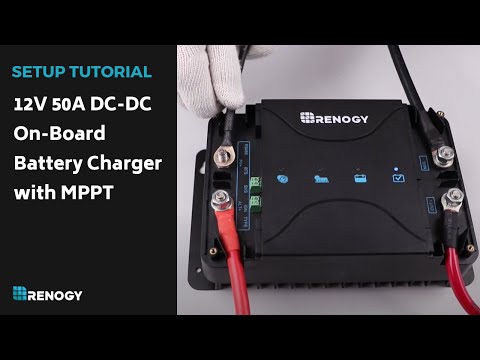
This is the part most first-timers skip and then wish they hadn't. A DC-DC charger pulls power from your vehicle's alternator while you drive and feeds it to the house bank at the correct lithium charge profile — so every mile between camps tops you off. It also protects the alternator from the heavy draw a big lithium bank would otherwise pull. Models with a built-in MPPT input (Renogy's DCC series) let one unit accept both alternator and solar, which simplifies the whole build.
Pros
- Recharges the bank from the alternator on the road
- Correct lithium charge profile; protects the alternator
- DCC models add a solar (MPPT) input in one box
Cons
- Adds wiring; size the cable to the amperage
Victron SmartSolar MPPT 100/30 Charge Controller
Premium · ~$120–150 · gets the most from your panels
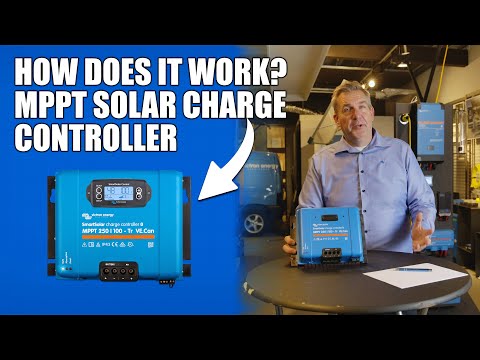
An MPPT controller squeezes noticeably more usable charge out of the same panels than a cheap PWM unit, especially in less-than-perfect sun — which is exactly when you need it. Victron's SmartSolar line is the one experienced builders reach for: efficient, durable, and with Bluetooth so you can watch your solar harvest from your phone. Pair it with a solar kit sized to your roof and it quietly refills the bank every day you're parked.
Pros
- More harvest than PWM, especially in weak sun
- Bluetooth app monitoring
- Bulletproof reputation in real builds
Cons
- Costs more than a basic PWM controller
Pure-Sine Inverter (2000W)
Mid–Premium · ~$300–550 · clean 120V from your battery
The inverter turns your 12V battery into the 120V household power your laptop, induction cooktop, and tools expect. Insist on pure sine — cheap modified-sine units can buzz, run hot, or damage sensitive electronics. A 2000W continuous unit covers most loads short of rooftop A/C; brands like Go Power and Renogy make dependable pure-sine models, and you step up in wattage only if you run heavy tools or a microwave alongside everything else. Hardwire it and fuse it close to the battery.
Pros
- Clean power that's safe for electronics
- 2000W handles most household loads
- Go Power / Renogy options across budgets
Cons
- Big continuous draw — size your bank to match
- Best hardwired and fused, not plugged in
Victron BMV-712 Smart Battery Monitor
Premium · ~$150–180 · the truth about your battery
A battery's voltage lies — it barely moves across most of a lithium battery's range, so without a proper monitor you're guessing how much you have left. A shunt-based monitor like the BMV-712 counts every amp in and out and shows true state-of-charge, on the unit and over Bluetooth. It's the part that turns a collection of components into a system you can actually manage, and it pays for itself the first time it keeps you from over-draining the bank.
Pros
- Accurate state-of-charge (not just voltage)
- Bluetooth history and alerts
- Essential for getting the most from lithium
Cons
- Install requires wiring the shunt correctly
EcoFlow Power Kit (All-in-One System)
Premium · ~$2,000+ · skip the wiring
Not everyone wants to spec and wire six separate components. An all-in-one system like EcoFlow's Power Kit bundles the battery, charging (alternator and solar inputs), inverter, and monitoring into an integrated unit designed for van and RV installs — fewer parts to match, one app, a cleaner install. You pay more than the sum of value components and give up some flexibility, but for a lot of builders the simplicity and single point of support are worth it.
Pros
- Battery + charging + inverter + monitor in one
- Simpler install; one app, one support line
- Designed for van/RV builds
Cons
- Costs more than equivalent value components
- Less flexible than a component build
See it in action
Official demos and hands-on walkthroughs of our picks. Videos play right here via YouTube.
How to design your system
Build in this order
Start with the battery, because everything else is sized to it. Then add the way you'll recharge it: a DC-DC charger if you drive between camps, solar with an MPPT controller if you sit for days, and ideally both. Add the inverter only as large as your real AC loads need, and finish with the monitor so you can see what the whole system is doing. Building in this order keeps you from buying a giant inverter you can't feed, or panels you have no controller for.
Size the battery to your daily watt-hours
Add up what you use in a day — our free RV Power Calculator does the math for you. As a rough guide, a single 100Ah lithium battery gives you roughly 1,000+ usable watt-hours; a couple of nights of lights, a fan, device charging, and a compressor fridge often lands in that range. Heavy users, residential fridges, and anyone running an inverter hard will want two or more batteries.
Two ways to recharge — use both if you can
The alternator (via a DC-DC charger) refills the bank while you drive; solar (via an MPPT controller) refills it while you're parked. Drivers who move every day or two lean on the alternator; people who post up in one spot lean on solar. Running both means you're charging whether you're rolling or relaxing — the combination is what makes true multi-day, engine-off camping work. See our solar kit guide to size the panels.
Don't skimp on wiring, fuses, and the monitor
A lithium system moves serious current. Use correctly sized cable for the amperage, fuse every source close to the battery, and install the battery monitor so you always know your true state-of-charge. These aren't the exciting parts, but they're the difference between a system that's safe and one that's a fire risk — and the monitor is what lets you actually use the capacity you paid for.
Frequently asked questions
Do I need a DC-DC charger, or can I charge the house battery straight from the alternator?
For a lithium house bank, use a DC-DC charger. Connecting lithium directly to the alternator can overload the alternator and won't deliver the correct charge profile. A DC-DC charger steps the voltage properly, protects the alternator, and is what makes "charge while you drive" safe and effective.
How many lithium batteries do I need?
Size it to your daily watt-hours. A single 100Ah lithium battery yields roughly 1,000+ usable watt-hours — enough for lights, a fan, device charging, and a compressor fridge for a night or two. Residential fridges, heavy inverter use, or longer stays usually call for two or more batteries. Our Power Calculator will estimate it from your actual loads.
MPPT or PWM solar controller?
MPPT. It pulls meaningfully more usable charge from the same panels than a cheaper PWM controller, especially in weak or partial sun — which is exactly when you need every watt. The modest price difference pays back in real harvest.
What size inverter should I get?
Only as large as your real AC loads. A 2000W pure-sine inverter covers most household electronics and small appliances; step up only if you run heavy tools or a microwave alongside everything else. Always choose pure sine for sensitive electronics, and size your battery bank to feed it.
Is a built component system better than an all-in-one power kit?
Both work. A component build (battery, DC-DC, MPPT, inverter, monitor) is more flexible and often cheaper for the capability, but takes more planning and wiring. An all-in-one kit trades some flexibility and cost for a simpler install and a single point of support — a good fit if you'd rather not spec each part.
Related guides
Best RV Deep-Cycle Batteries
Go deeper on the house bank — lithium vs. AGM and real usable capacity.
Read the guide →Best 12V RV Refrigerators
The biggest load your system runs — size the fridge to the build.
Read the guide →Best RV Power Inverters
Turn your battery bank into clean household AC — sizing, surge, and pure-sine picks.
Read the guide →Best RV Generators & Power Stations
Prefer the easy button? Self-contained power without the wiring.
Read the guide →