The short answer
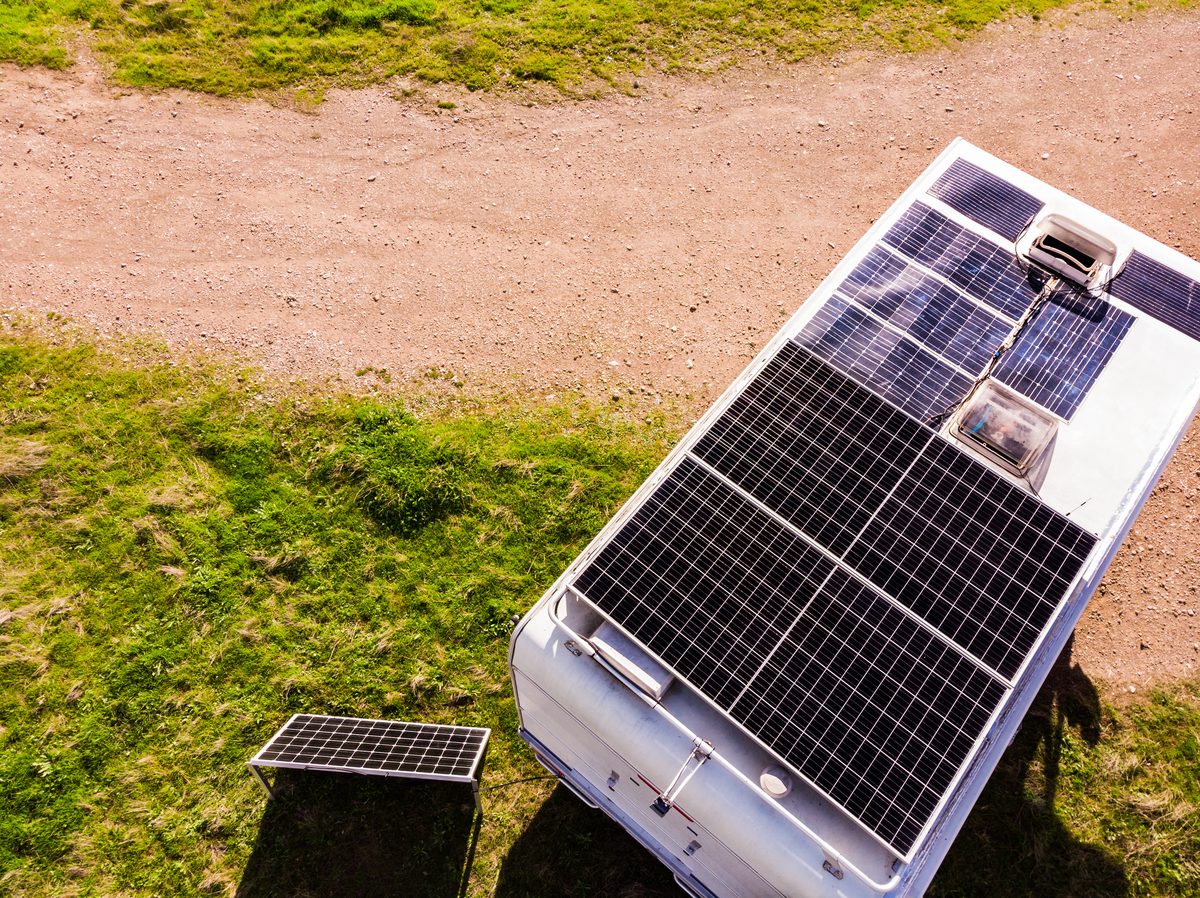
Your first decision is rooftop vs. portable. For a permanent full-timer array, the Renogy 400W Premium Kit (with a 40A MPPT controller) is our best overall. If you would rather not drill your roof, a portable panel you aim at the sun is better — the Renogy 200W Eclipse suitcase for fast 12V charging, or the EcoFlow/Jackery folding panels if you own their power stations. The BougeRV 200W is the most watts per dollar. Match panel wattage to your battery bank and daily draw.
Why we're confident: solar picks start with rooftop-vs-portable because that single choice, not brand, decides which kit is right for your rig.
Quick picks
- Best overall: Renogy 400W Premium Solar Kit (40A MPPT) — full rooftop array for full-timers. Premium · ~$580
- Best portable premium: EcoFlow 220W Bifacial Portable Solar Panel — high-efficiency, pairs with EcoFlow power stations. Premium · ~$399
- Best suitcase: Renogy 200W Eclipse Solar Suitcase — fast 12V charging, no roof install. Mid · ~$320
- Best plug-and-play: Jackery SolarSaga 100W Foldable Panel — drop-in for Jackery owners. Mid · ~$279–299
- Best value 200W: BougeRV 200W Portable Solar Panel — most watts per dollar. Budget · ~$196
- Best ultralight starter: DOKIO 160W Folding Solar Panel — featherweight first panel. Budget · ~$130–160
How much solar do you need?
| Your style | Panel wattage | Battery bank | Controller |
|---|---|---|---|
| Weekender (lights, phones, fan) | 100–200W | 100Ah | PWM ok |
| Long weekends (fridge + electronics) | 300–400W | 200Ah lithium | MPPT |
| Full-timer / boondocker | 600W+ | 400Ah+ lithium | MPPT 50A+ |
Rule of thumb: your panels recharge what you use, and your battery bank is what you actually draw from overnight. Undersize the battery and big panels won't help; undersize the panels and you'll never refill. Size them together. (See our RV battery guide.)
Compare the picks
| Product | Tier | ~Price | Best for |
|---|---|---|---|
| Renogy 400W Premium Solar Kit (40A MPPT) | Premium | ~$580 | Full-timer rooftop arrays |
| EcoFlow 220W Bifacial Portable Panel | Premium | ~$399 | EcoFlow power-station owners |
| Renogy 200W Eclipse Solar Suitcase | Mid | ~$320 | Fast 12V charging, no roof work |
| Jackery SolarSaga 100W Foldable Panel | Mid | ~$279–299 | Plug-and-play for Jackery owners |
| BougeRV 200W Portable Solar Panel | Budget | ~$196 | Most watts per dollar |
| DOKIO 160W Folding Solar Panel | Budget | ~$130–160 | Ultralight first panel |
The reviews
Renogy 400W Premium Solar Kit (4×100W + 40A MPPT)
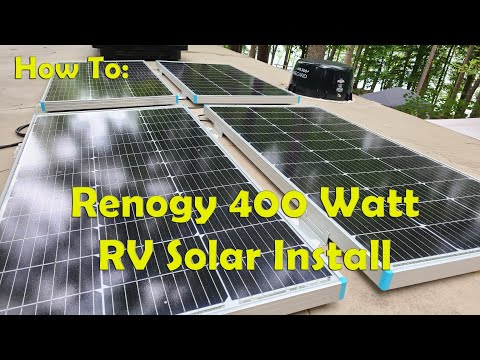
Premium · ~$580 · full rooftop array, cables & mounts included
The complete rooftop package for full-timers: four monocrystalline panels, a 40A MPPT controller, and the brackets and wiring to install it in a weekend. It keeps a 200–400Ah lithium bank topped through long off-grid stretches and is easy to expand later. The benchmark "buy it once" kit for a Class A coach roof.
Pros
- Complete kit — panels, MPPT, mounts, cable
- 40A MPPT pulls ~20–30% more than PWM
- Expandable Renogy ecosystem
Cons
- Permanent roof install + wiring
- Needs real roof space
EcoFlow 220W Bifacial Portable Solar Panel

Premium · ~$399 · bifacial, folds into a carry case
A high-efficiency folding panel whose bifacial back side harvests reflected light for extra watts. It plugs straight into EcoFlow power stations (DELTA / RIVER) with no controller fuss, and the integrated kickstand case sets up in seconds. The cleanest premium portable for anyone already in the EcoFlow world.
Pros
- Bifacial captures extra reflected light
- Plug-and-play with EcoFlow stations
- Durable folding case + kickstand
Cons
- Premium price per watt
- Best value only within EcoFlow ecosystem
Renogy 200W Eclipse Portable Solar Suitcase (with Controller)
Mid · ~$320 · fast 12V charging, zero roof work
Unfold it, point it at the sun, and clip it to your battery — the included charge controller means it charges a 12V bank straight out of the bag. Park the rig in the shade and chase the light with the panel. The most practical mid-tier choice for owners who want real wattage without drilling the roof.
Pros
- No roof install — sets up anywhere
- Controller included for 12V charging
- Folds flat for storage
Cons
- Must deploy and stow each stop
- Bulky and on the heavier side
Jackery SolarSaga 100W Foldable Solar Panel
Mid · ~$279–299 · drop-in for Jackery Explorer owners
If you run a Jackery Explorer power station, this is the no-thinking-required panel: the connector matches, the kickstands flip out, and it starts charging in under a minute. Light enough to carry to the picnic table and back. The easiest entry point for weekenders who want power without a system to learn.
Pros
- Direct match for Jackery stations
- Lightweight, foldable, fast setup
- Weather-resistant build
Cons
- Only 100W — modest output
- Priciest 100W per watt here
BougeRV 200W Portable Folding Solar Panel
Budget · ~$196 · most watts per dollar
The high-value pick: a full 200 folding watts for under two hundred dollars. You supply your own charge controller, but the panel itself is well-built monocrystalline with solid output. Ideal for a budget boondocking setup or a second panel to stack alongside your main array.
Pros
- Excellent watts-per-dollar
- Full 200W in a folding case
- Great as an add-on panel
Cons
- No controller in the box
- Lighter-duty hardware than premium kits
DOKIO 160W Portable Folding Solar Panel
Budget · ~$130–160 · ultralight first panel
One of the lightest folding panels you can buy, which makes it the easy "try solar" purchase. It will not run a fridge, but it keeps phones, lights, and a small battery topped up on weekend trips and stores flat under a dinette seat. The lowest-commitment way to find out how much solar you actually need.
Pros
- Featherweight and very portable
- Lowest cost of entry here
- Folds thin for tight storage
Cons
- Modest 160W output
- Controller sold separately
See it in action
Official demos and hands-on walkthroughs of our picks. Videos play right here via YouTube.
How to choose
1. MPPT vs. PWM controllers
MPPT controllers are ~20–30% more efficient and worth it for any kit over ~200W or when panels and battery voltages don't match. PWM is fine for small, budget setups.
2. Match panels to your battery chemistry
Lithium (LiFePO4) charges faster and deeper than lead-acid, so it pairs best with bigger solar. If you're still on lead-acid, upgrading the battery often unlocks more from the solar you already have.
3. Don't forget wire gauge & fusing
Undersized wiring quietly steals watts and creates a fire risk. Use the kit's recommended gauge and proper fuses/breakers — or have it installed.
Frequently asked questions
How much solar do I need for my RV?
It depends on your draw. Weekenders running lights, fans, and devices do well on 100–200W, long-weekenders with a fridge want 300–400W, and full-timers or boondockers usually need 600W or more paired with a large lithium bank.
What is the difference between MPPT and PWM controllers?
MPPT controllers are roughly 20–30% more efficient and are worth it on any kit over about 200W or when panel and battery voltages do not match. PWM is fine for small, budget setups.
Do I need a rooftop kit or a portable suitcase?
Rooftop arrays charge automatically and free up ground space but require a permanent install and adequate roof room. Portable suitcase or folding panels need no install and let you park in the shade while the panel chases the sun, but you have to deploy and stow them at each stop.
Will solar charge my battery on a cloudy day?
Yes, but at reduced output — expect a fraction of rated wattage under heavy clouds. This is why panels and battery capacity are sized together, so the bank carries you through low-sun stretches.
Is solar worth it on a big Class A motorhome?
It can be, since a large coach roof has plenty of room for a 600W-plus array that keeps a sizable lithium bank topped without running a generator. Just size the panels to the bank and use an MPPT controller rated for the higher current.
Related guides
Best RV Deep-Cycle Batteries
The bank that actually holds your solar power — lithium vs. AGM.
Read the guide →Best RV Generators & Power Stations
Battery stations and generators for when the sun does not cooperate.
Read the guide →Best 12V RV Refrigerators
What your panels keep cold off-grid — 12V fridge/freezers compared.
Read the guide →