The short answer
For most RVs, the MaxxAir MaxxFan Deluxe (00-07500K) is the best roof vent fan in 2026 — 10 speeds, a remote and thermostat, and a built-in rain shield so you can leave it running in a shower. It drops into the standard 14-inch square roof opening. The Dometic Fan-Tastic 7350 is the closest rival with an automatic rain sensor; the 4-speed MaxxFan 00-06401K is the best step-up value, and the Heng's Vortex II is the cheapest powered drop-in.
Why we're confident: vent-fan picks are ranked on airflow, rain handling, and fit to the standard 14-inch roof cutout — the things that decide day-to-day comfort.
Quick picks
- Best overall: MaxxAir MaxxFan Deluxe 00-07500K — 10-speed, remote, thermostat, rain shield; drops into 14"×14". Premium · ~$380–430
- Best rival (auto rain): Dometic Fan-Tastic Vent 7350 — 14-speed with auto rain sensor that closes the dome. Premium · ~$330–380
- Best step-up value: MaxxAir MaxxFan Deluxe 00-06401K — 4-speed exhaust, lower-cost MaxxFan. Mid · ~$250–290
- Best entry powered fan: Dometic Fan-Tastic Vent 1250 — 3-speed reversible at a friendly price. Mid · ~$150–200
- Best budget replacement: Heng's Vortex II RV Roof Vent Fan — cheapest powered drop-in. Budget · ~$80–120
- Best cheap add-on: Camco RV Vent Insulator & Skylight Cover (45192) — reflective foam plug that boosts A/C efficiency. Budget · ~$16–22
What actually matters
| Spec | Why it matters | Look for |
|---|---|---|
| CFM (airflow) | How much air it moves | 900+ CFM for real cooling |
| Reversible | Intake or exhaust | Yes — exhaust heat, intake cool air |
| Rain cover / lid | Run it during rain | Built-in cover |
| Variable speed + thermostat | Quiet nights, auto-cycling | 10 speeds + thermostat |
Standard RV roof openings are 14"×14", so most powered fans are a direct swap for a manual vent — no cutting, just sealant and screws. The single biggest comfort upgrade is reversibility: exhaust on a hot afternoon, intake on a cool evening, and crack a window on the far end to create a cross-breeze through the whole rig.
Compare the picks
| Product | Tier | ~Price | Best for |
|---|---|---|---|
| MaxxAir MaxxFan Deluxe 00-07500K | Premium | ~$380–430 | 10-speed flagship that runs open in rain |
| Dometic Fan-Tastic Vent 7350 | Premium | ~$330–380 | 14-speed with auto rain-sensor close |
| MaxxAir MaxxFan Deluxe 00-06401K | Mid | ~$250–290 | MaxxFan build and rain shield for less |
| Dometic Fan-Tastic Vent 1250 | Mid | ~$150–200 | Entry reversible powered fan from a name brand |
| Heng's Vortex II RV Roof Vent Fan | Budget | ~$80–120 | Cheapest powered 14"×14" drop-in |
| Camco RV Vent Insulator & Skylight Cover (45192) | Budget | ~$16–22 | Reflective plug that boosts A/C efficiency |
The reviews
MaxxAir MaxxFan Deluxe 00-07500K
Premium · ~$380–430 · 10-speed, remote, thermostat
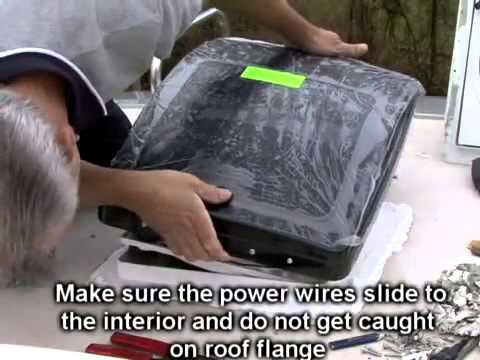
The fan most RVers wish they had installed first. Ten speeds, reversible intake and exhaust, a thermostat that cycles it overnight, a remote, and the signature built-in rain shield that lets you run it open in a downpour. It drops straight into the standard 14"×14" opening, so on most rigs it is a no-cut swap. Quiet on low, genuinely cooling on high.
Pros
- Reversible + thermostat + remote
- Rain shield runs open in the wet
- Direct 14"×14" drop-in
Cons
- Priciest option
- Tall lid profile when open
Dometic Fan-Tastic Vent 7350

Premium · ~$330–380 · 14-speed, auto rain sensor
The MaxxFan's main rival, and the choice if you forget to close vents. Its rain sensor automatically lowers the dome the moment it gets wet, then you re-open by hand. Fourteen speeds, reversible airflow, thermostat, and a remote make it every bit as capable for daily cooling. The closing-dome design means you cannot run it open in rain like the MaxxFan, but the auto-close saves your floor.
Pros
- Auto rain sensor closes the dome
- 14 speeds + thermostat + remote
- Reversible airflow
Cons
- Closes in rain (no open-lid shield)
- Re-open is manual
MaxxAir MaxxFan Deluxe 00-06401K
Mid · ~$250–290 · 4-speed exhaust MaxxFan
The same trusted MaxxFan build and rain shield in a simpler, cheaper package. You get four speeds and exhaust operation rather than the ten-speed reversible flagship, but you keep the brand's reliability and the ability to run open in the rain. A smart middle ground when the top model is more fan than you need.
Pros
- MaxxFan build for less money
- Rain shield runs open in the wet
- 14"×14" drop-in
Cons
- Only four speeds, exhaust-only
- No thermostat
Dometic Fan-Tastic Vent 1250
Mid · ~$150–200 · 3-speed reversible
The entry point to powered, reversible airflow from a name brand. Three speeds and manual operation keep it simple and affordable, and reversibility still lets you exhaust heat or pull cool air in. No rain sensor or thermostat, but for the price it is a real jump over any manual crank vent.
Pros
- Reversible airflow at a low price
- Simple, reliable, name brand
- 14"×14" drop-in
Cons
- No rain sensor or thermostat
- Only three speeds
Heng's Vortex II RV Roof Vent Fan
Budget · ~$80–120 · cheapest powered drop-in
The least expensive way to put a powered fan in a 14"×14" hole. It will not match MaxxAir or Dometic on speeds or features, but it moves real air and replaces a dead or manual vent for a fraction of the price. The go-to when you need basic powered airflow on a tight budget.
Pros
- Lowest-cost powered fan
- Standard 14"×14" fit
- Simple install
Cons
- Basic — few speeds, fewer features
- No rain cover or thermostat
Camco RV Vent Insulator & Skylight Cover (45192)
Budget · ~$16–22 · reflective foam plug
Not a fan, but the cheapest comfort upgrade on this page. This reflective foam plug presses into a 14"×14" vent opening to block radiant heat coming through the dome, so the A/C does not have to fight the sun overhead. Pop it in on hot afternoons or cold nights, pull it out when you want to run the fan. A few dollars that pay for themselves fast.
Pros
- Cuts radiant heat through the vent
- Boosts A/C efficiency for a few dollars
- Reversible insulation in winter
Cons
- Manual — remove it to run the fan
- Not a fan or airflow device
See it in action
Official demos and hands-on walkthroughs of our picks. Videos play right here via YouTube.
How to choose
1. Get reversible
Intake and exhaust is the whole trick — pull heat out high, draw cool air in, and create cross-flow with a cracked window.
2. Insist on a rain cover
A vent you have to close every time it sprinkles is a vent you'll stop using. A built-in cover lets it run through weather.
3. Match the opening
Most fans drop into the standard 14"×14" hole. Confirm your cutout before buying; upsizing means cutting the roof.
4. Mind the power on max
High CFM draws more amps. Fine on shore power; on battery, run a middle speed and let the thermostat do the rest.
Frequently asked questions
Will a roof vent fan fit my RV opening?
Standard RV roof vent openings are 14 inches by 14 inches, and nearly every powered fan here drops straight into that cutout with sealant and screws. Measure your existing opening before buying, since upsizing to a larger fan means cutting the roof.
Can I run a roof vent fan while it is raining?
It depends on the design. The MaxxFan has a built-in rain shield so it can run open in a downpour, while the Fan-Tastic 7350 uses a sensor that automatically lowers the dome when it gets wet. Simpler fans must be closed manually before rain.
How much power does a roof vent fan draw?
These are 12-volt fans that sip power compared to an air conditioner, which is why they shine for boondocking. Higher CFM speeds draw more amps, so on battery a middle speed with the thermostat cycling it is the efficient choice.
Why does reversible airflow matter?
Reversibility lets you exhaust hot air on a warm afternoon and pull cool air in on a cool evening. Cracking a window at the far end of the rig creates a cross-breeze that ventilates the whole cabin, which a one-direction fan cannot match.
Will a vent fan help with condensation?
Yes. Cooking, showering, and breathing put moisture into the air that fogs windows and breeds mildew overnight. Running a vent fan pulls that humid air out and dramatically cuts the condensation you wake up to.
Related guides
Best RV AC Soft Starts
Run your air conditioner on a smaller generator or off battery and solar.
Read the guide →Best RV Solar Kits
Power your 12-volt fans and electronics off-grid without running the generator.
Read the guide →Best RV Deep Cycle Batteries
The house bank that keeps the fan and lights running through the night.
Read the guide →