The short answer
If your loaded tongue weight is more than about 10–15% of your tow vehicle's capacity, a weight-distribution hitch with sway control is not optional — it is a safety must. The Equal-i-zer 4-Point is our best overall: USA-made trunnion bars with integrated 4-point sway control that stops sway before it starts. The Blue Ox SwayPro is the quietest leveler, the Andersen No-Sway the lightest and easiest to hook up, and the Fastway e2 the best value step-up. Match the bar rating to your trailer's gross weight.
Why we're confident: we lead with the safety threshold and bar-rating match because an under- or over-rated WDH is worse than none at all.
Quick picks
- Best overall: Equal-i-zer 4-Point Sway Control WDH — USA-made trunnion bars that stop sway before it starts. Premium · ~$450–700
- Best quiet leveler: Blue Ox SwayPro BXW1000 — spring-bar + chain sway control, rated 10,000 lb GTW. Premium · ~$450–600
- Lightest / quietest: Andersen No-Sway WDH — chain-and-spring tension, easy hookup. Mid · ~$500–650
- Best value step-up: Fastway e2 2-Point WDH — built-in sway control, popular all-rounder. Mid · ~$300–450
- Best budget: Husky Center Line TS — friction sway brake, rated 12,000 lb GTW. Budget · ~$250–400
Matching it to your trailer
| Step | What to check | Why |
|---|---|---|
| Find your tongue weight | ~10–15% of loaded trailer weight | The hitch must be rated for it — loaded, not dry |
| Pick the right bar rating | Tongue weight in the middle of the range | Bars too stiff or too soft both ride badly |
| Weigh loaded, with gear | Include water, propane, cargo | Dry weight badly understates reality |
The most common mistake is buying a hitch rated for the trailer's dry weight. Load the rig the way you actually camp — full fresh tank, propane, bikes, the works — find the real tongue weight, and choose a bar rating that puts you in the middle of its range. A hitch that's overrated rides as harshly as one that's underrated.
Note: this guide covers travel-trailer weight-distribution hitches. If you own a Class A motorhome and want to flat-tow a car behind the coach, you need a tow bar plus a baseplate (Blue Ox or Roadmaster) instead — a different setup we will cover in a future guide.
Compare the picks
| Product | Tier | ~Price | Best for |
|---|---|---|---|
| Equal-i-zer 4-Point Sway Control WDH | Premium | ~$450–700 | Best overall — proactive 4-point sway |
| Blue Ox SwayPro BXW1000 | Premium | ~$450–600 | Quiet leveling, 10,000 lb GTW |
| Andersen No-Sway WDH | Mid | ~$500–650 | Lightest and quietest, easy hookup |
| Fastway e2 2-Point WDH | Mid | ~$300–450 | Best value step-up, built-in sway |
| Husky Center Line TS | Budget | ~$250–400 | Budget pick, high 12,000 lb GTW |
The reviews
Equal-i-zer 4-Point Sway Control WDH
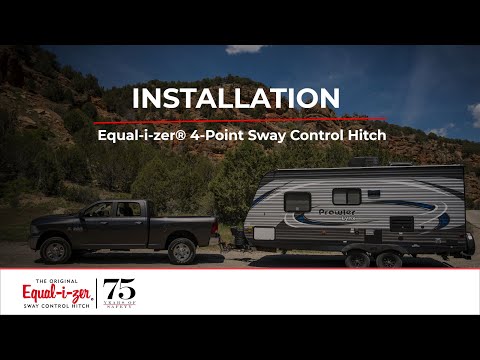
Premium · ~$450–700 · USA-made, 4-point sway
The benchmark most experienced towers settle on. Its four friction points are built into the head and bracket geometry, so the hitch resists sway proactively instead of reacting after the trailer starts to wag. USA-made, no separate add-on bars to attach or forget, and a famously planted feel at highway speed. Match the bar rating to your loaded tongue weight and it just works.
Pros
- 4-point integrated sway — stops it early
- USA-made, trunnion bars, fewer loose parts
- Rock-steady once dialed in
Cons
- Can clunk on tight turns
- Heavier head to handle
Blue Ox SwayPro BXW1000 WDH (10,000 lb GTW)
Premium · ~$450–600 · spring-bar + chain sway control
Blue Ox's spring-bar design uses chained latches under the bars to apply constant tension, which delivers strong sway control with noticeably less of the friction clunk you get from other premium hitches. Rated to 10,000 lb gross trailer weight, it levels the rig quietly and hooks up cleanly once set. The favorite for towers who want premium stability without the noise.
Pros
- Quiet — little to no friction clunk
- Constant-tension chain latches
- 10,000 lb GTW capacity
Cons
- Chain links can rattle if loose
- Premium price
Andersen No-Sway Weight Distribution Hitch

Mid · ~$500–650 · chain-and-spring tension, lightweight
The outlier that wins on weight and noise. Instead of heavy steel bars, Andersen uses chains under spring tension and a friction bushing in the ball, so the whole hitch is dramatically lighter to lift and nearly silent in turns. Hookup is among the easiest here. The trade is that the unconventional design has its devotees and skeptics — but for solo travelers tired of wrestling steel bars, it is a relief.
Pros
- Far lighter than steel-bar hitches
- Very quiet, no metal-on-metal clunk
- Easy, fast hookup
Cons
- Polyurethane bushing wears, needs replacing
- Less conventional, polarizing design
Fastway e2 2-Point WDH w/ Sway Control
Mid · ~$300–450 · built-in 2-point sway
From the same family as the Equal-i-zer, the e2 brings integrated two-point friction sway control at a meaningfully lower price. There are no separate sway bars to bolt on, so setup is simpler than add-on kits, and it tows mid-size trailers level and stable. The popular value step-up for buyers who want built-in sway without paying flagship money.
Pros
- Integrated sway, no add-on bars
- Strong price-to-feature value
- Trusted Progress/Fastway lineage
Cons
- Two-point, not four-point sway
- Some friction noise on turns
Husky Center Line TS WDH (12,000 lb GTW)
Budget · ~$250–400 · friction sway brake, 12,000 lb GTW
The most hitch for the least money on this list. The Center Line TS pairs trunnion bars with a built-in friction sway brake and carries a stout 12,000 lb gross-trailer-weight rating, so even larger trailers are covered. It is not as silky or as proactive as the premium picks, but it levels and stabilizes a mid-to-large trailer reliably for a budget price.
Pros
- High 12,000 lb GTW for the price
- Built-in friction sway brake
- Strong value from a known brand
Cons
- Friction sway is reactive, not proactive
- Heavier, noisier than premium units
See it in action
Official demos and hands-on walkthroughs of our picks. Videos play right here via YouTube.
How to choose
1. Rate it to loaded tongue weight
Weigh the trailer the way you camp and aim for the middle of the bar's range. Dry-weight ratings will mislead you.
2. Don't skip sway control
Weight distribution levels the load; sway control keeps it straight. On a tall travel trailer you want both — integrated is the cleanest.
3. Set it up level
Measure the truck's front fender height before and after hookup; adjust the bars until the front returns close to its unloaded height. That's the whole point.
4. Re-check after the first trip
Bars settle and chains stretch a touch. Re-verify level and torque after your first real tow.
Frequently asked questions
How do I know what size or bar rating weight-distribution hitch I need?
Match the spring or trunnion bar rating to your loaded tongue weight, which is typically 10 to 15 percent of the trailer's loaded weight. Weigh the trailer the way you actually camp, then pick a bar rating that puts your tongue weight in the middle of its range rather than at the top or bottom.
Do I really need sway control, or is weight distribution enough?
They solve two different problems: weight distribution levels the load front to back, while sway control keeps the trailer tracking straight in crosswinds and semi blasts. On a tall travel trailer you want both, and an integrated design that builds sway control into the head is cleaner than bolt-on friction bars.
Can I install a weight-distribution hitch myself?
Yes, most owners set one up in a driveway with basic hand tools. The key step is measuring the truck's front fender height before and after hookup and adjusting the bars until the front returns close to its unloaded height.
Does a Class A motorhome need a weight-distribution hitch?
No. This category is for travel trailers and fifth-wheel-adjacent towables pulled behind a truck or SUV. If you own a Class A and want to flat-tow a car behind the coach, you need a tow bar and baseplate instead, which is a different setup.
Why do weight-distribution hitches clunk on turns?
Friction-based sway control creates metal-on-metal resistance, and tight turns make that resistance audible as a clunk. It is usually normal, though chain-and-spring designs like the Andersen and quieter spring-bar systems produce far less of it.
Related guides
Best RV Leveling Systems
Get flat fast once you reach the site — drive-on levelers, blocks, and stabilizers.
Read the guide →Best RV Backup Cameras
See behind a long rig and your towed trailer when backing into tight sites.
Read the guide →Best RV Tire Pressure Monitors
Watch trailer tire pressure and heat on the road to prevent blowouts.
Read the guide →